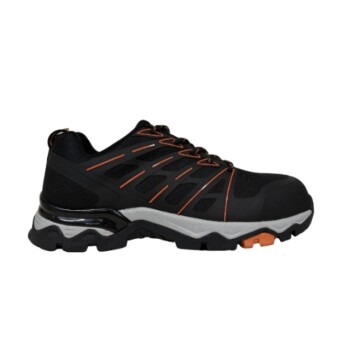
La fonction principale des chaussures de sécurité standardisées dans un laboratoire de fabrication est de servir de mécanisme de défense essentiel contre les blessures physiques aux pieds. Au-delà de la protection physique, ces articles jouent un rôle unique dans les installations modernes en fournissant un identifiant visuel standardisé qui permet aux systèmes de surveillance automatisés de vérifier la conformité aux protocoles de sécurité.
Alors que l'objectif immédiat des chaussures de sécurité est de dévier les impacts et d'éviter les glissades, leur conception standardisée est tout aussi vitale pour intégrer la sécurité humaine dans les systèmes de surveillance automatisés des installations.
Ingénierie pour la défense physique
Résistance aux chocs et à la perforation
Dans un laboratoire de fabrication, le risque de chute d'outils ou d'équipement lourd est constant. Les chaussures de sécurité y remédient grâce à des embouts renforcés conçus pour absorber les forces d'écrasement.
De plus, l'environnement contient souvent des débris métalliques qui présentent un risque de perforation. La structure de la chaussure agit comme une barrière, empêchant les objets pointus de pénétrer la semelle et de blesser le pied.
Stabilité sur les surfaces dangereuses
Les sols des laboratoires sont fréquemment compromis par des lubrifiants, des produits chimiques ou d'autres fluides.
Pour atténuer cela, les chaussures de sécurité sont dotées de semelles extérieures antidérapantes. Celles-ci sont conçues pour maintenir l'adhérence sur les surfaces glissantes, empêchant les chutes qui pourraient entraîner des blessures graves.
Le rôle dans la conformité automatisée
Protocoles de vérification visuelle
Dans les environnements de fabrication avancés, la sécurité est souvent surveillée par des systèmes automatisés plutôt que par de simples superviseurs humains.
L'apparence industrielle standardisée de ces chaussures n'est pas seulement esthétique ; elle sert de point de données. Les systèmes de surveillance automatisés reconnaissent ce profil visuel spécifique pour confirmer qu'un travailleur est correctement équipé avant d'interagir avec des machines sensibles.
Comprendre les compromis
Fonctionnalité vs. Reconnaissance
Un piège courant est de supposer que toute chaussure robuste est "sûre" dans un laboratoire moderne.
Bien qu'une botte non standardisée puisse offrir une protection physique, elle peut manquer des indices visuels spécifiques requis par les systèmes de surveillance automatisés. Cela peut entraîner des échecs de conformité ou des alertes système, même si les pieds du travailleur sont techniquement protégés.
Les limites des EPI
Les chaussures de sécurité sont la dernière ligne de défense, pas la première.
Elles protègent le porteur après qu'un danger a été rencontré (par exemple, un outil est déjà tombé). Elles ne remplacent pas la nécessité d'espaces de travail propres et d'une manipulation correcte de l'équipement pour éviter que le danger ne se produise en premier lieu.
Assurer une sécurité complète
Pour maximiser la sécurité et l'efficacité opérationnelle, sélectionnez des chaussures en fonction de vos contraintes environnementales spécifiques :
- Si votre objectif principal est la sécurité physique : Privilégiez les chaussures avec des embouts renforcés et des semelles extérieures antidérapantes pour atténuer les risques de chute d'objets et de lubrifiants.
- Si votre objectif principal est la conformité automatisée : Assurez-vous que les chaussures respectent strictement l'apparence industrielle standardisée requise par les systèmes de surveillance de votre installation.
La standardisation comble le fossé entre la protection personnelle et la vérification de la sécurité systémique.
Tableau récapitulatif :
| Caractéristique | Fonction principale | Avantage en laboratoire |
|---|---|---|
| Embouts renforcés | Résistance aux chocs | Protège contre la chute d'outils et d'équipements lourds |
| Semelles antidérapantes | Contrôle de traction | Prévient les chutes sur les surfaces contaminées par des lubrifiants ou des produits chimiques |
| Profil standardisé | Vérification visuelle | Permet aux systèmes automatisés de surveiller la conformité aux protocoles de sécurité |
| Résistance à la perforation | Protection barrière | Prévient les blessures causées par des débris métalliques pointus ou des déchets de laboratoire |
Sécurisez votre personnel avec les chaussures standardisées 3515
En tant que fabricant à grande échelle au service de distributeurs mondiaux et de propriétaires de marques, 3515 offre la précision et la durabilité requises pour les environnements de fabrication à enjeux élevés. Notre série phare de chaussures de sécurité est conçue non seulement pour une défense physique supérieure, avec une résistance avancée aux chocs et à la perforation, mais aussi pour les profils visuels standardisés nécessaires aux systèmes de surveillance automatisés modernes.
Des bottes tactiques et des baskets d'entraînement aux chaussures habillées et formelles professionnelles, 3515 offre des capacités de production complètes pour répondre à vos divers besoins en gros. Assurez la protection de votre équipe et la conformité de votre installation grâce à des solutions de chaussures leaders de l'industrie.
Contactez-nous dès aujourd'hui pour discuter de vos besoins en gros
Références
- Adinda Sekar Ludwika, Achmad Pratama Rifai. Deep Learning for Detection of Proper Utilization and Adequacy of Personal Protective Equipment in Manufacturing Teaching Laboratories. DOI: 10.3390/safety10010026
Cet article est également basé sur des informations techniques de 3515 Base de Connaissances .
Produits associés
- Chaussures de sécurité athlétiques KPU haut de gamme en gros
- Chaussures de sécurité légères haut de gamme pour commandes en gros et en vrac
- Fabricant de chaussures de sécurité en gros pour les commandes en gros et les commandes OEM personnalisées
- Chaussure de sécurité athlétique KPU avancée avec embout en acier et système de laçage rotatif antidérapant
- Chaussures de sécurité sportives en daim premium pour vente en gros et commandes groupées
Les gens demandent aussi
- Quel rôle la blockchain joue-t-elle dans la transparence de la chaîne d'approvisionnement des chaussures ? Améliorer la traçabilité et la vérification des chaussures de sécurité
- Quelle est une alternative recommandée à l'utilisation de la laque pour la résistance au glissement ? Abandonnez les astuces peu fiables pour une vraie sécurité
- Comment l'absence d'EPI (chaussures de sécurité et casques) est-elle catégorisée dans l'étiquetage des données de mouvement de construction ? Débloquez des informations de sécurité en temps réel !
- Quels dangers sur le lieu de travail indiquent la nécessité de porter des chaussures de sécurité ? Identifiez les risques pour protéger votre personnel.
- Quel rôle jouent les chaussures de sécurité spécialisées dans la prévention des chutes ? Ingénierie de la stabilité dans les environnements industriels