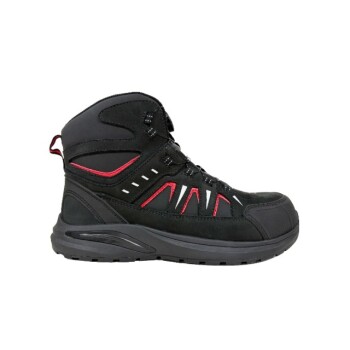
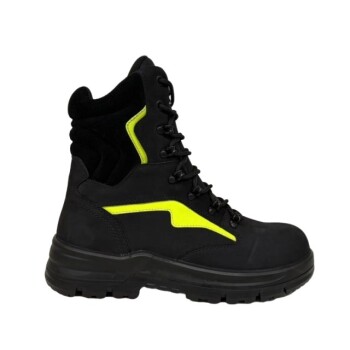
Les chaussures de sécurité industrielles servent de barrière physique fondamentale entre les pieds d'un travailleur et l'environnement de fabrication dangereux. Utilisant principalement des embouts en acier ou des couches composites de haute résistance, ces chaussures sont conçues pour absorber les forces de compression dues à la chute d'objets lourds et prévenir les plaies par perforation causées par des matériaux tranchants au sol.
Le rôle essentiel des chaussures industrielles est de fonctionner comme la dernière ligne de défense dans une stratégie d'équipements de protection individuelle (EPI). Elles transforment le pied vulnérable en une zone protégée, atténuant la gravité des blessures par compression et perforation dans des conditions industrielles complexes.
Atténuation des traumatismes physiques
Protection contre les impacts et la compression
Le rôle le plus crucial des chaussures de sécurité est de prévenir les blessures par compression. Dans la fabrication à haut risque, le risque de chute de composants ou d'outils lourds est constant.
Les embouts en acier intégrés ou les couches protectrices composites agissent comme un bouclier rigide. Ils résistent efficacement aux forces d'impact, prévenant des issues graves telles que les fractures du pied ou les écrasements lorsque des objets lourds frappent le pied.
Résistance à la perforation
Les sols des usines sont fréquemment jonchés de débris tranchants, tels que des copeaux de métal, des clous ou des chutes de matériaux.
Les chaussures de sécurité créent une couche impénétrable contre ces dangers au niveau du sol. En intégrant des matériaux résistants à la perforation, elles garantissent que les objets tranchants ne peuvent pas pénétrer la semelle et blesser les tissus mous du pied.
Gestion des dangers environnementaux
Stabilité sur les surfaces complexes
Au-delà de la protection contre les impacts, les chaussures de sécurité jouent un rôle vital dans le maintien de la stabilité de la marche.
Les environnements à haut risque impliquent souvent des sols gras ou chimiquement glissants. Les chaussures de sécurité professionnelles sont dotées de semelles extérieures antidérapantes spécialisées conçues pour offrir une adhérence, réduisant considérablement le risque de glissades et de chutes dans ces conditions instables.
Résistance aux produits chimiques et aux fluides
Dans les environnements impliquant des huiles et des produits chimiques, les chaussures standard sont insuffisantes.
Les chaussures de sécurité utilisent des matériaux résistants aux produits chimiques pour empêcher les liquides dangereux de pénétrer dans la chaussure. Cette fonction de barrière protège la peau du contact direct avec des substances corrosives et garantit que l'intégrité structurelle de la chaussure reste intacte malgré l'exposition.
Comprendre les compromis
Poids vs. Fatigue
Bien que les embouts en acier offrent une protection robuste, ils peuvent augmenter le poids de la chaussure.
La conception ergonomique est donc un contrepoids essentiel. Des caractéristiques telles qu'un soutien de la voûte plantaire optimisé sont nécessaires pour réduire la fatigue lors de station debout prolongée. Si les chaussures sont trop lourdes ou inconfortables, cela diminue l'observance par le porteur, annulant ainsi leurs avantages en matière de sécurité.
Limites biologiques et de contamination
Bien que les chaussures de sécurité protègent le porteur, elles peuvent également servir de vecteurs de contamination.
Dans les zones très sensibles, les chaussures peuvent transporter des agents pathogènes ou des produits chimiques entre les zones propres et sales. Dans ces contextes spécifiques, le rôle de la chaussure s'étend à la prévention de la contamination croisée, nécessitant souvent des couvre-chaussures supplémentaires pour maintenir l'intégrité des barrières environnementales.
Faire le bon choix pour votre objectif
La sélection des bonnes chaussures de sécurité nécessite de faire correspondre les caractéristiques de protection aux risques principaux spécifiques de votre installation.
- Si votre objectif principal est l'exploitation de machines lourdes : Privilégiez les chaussures avec des embouts en acier ou composites renforcés pour maximiser la protection contre les forces d'écrasement et les chutes d'objets.
- Si votre objectif principal est le traitement de liquides ou de produits chimiques : Privilégiez les chaussures avec des matériaux résistants aux produits chimiques et des semelles extérieures antidérapantes pour prévenir l'exposition de la peau et assurer la stabilité sur les surfaces glissantes.
- Si votre objectif principal est la conformité et l'endurance de la main-d'œuvre : Privilégiez les chaussures avec un soutien ergonomique de la voûte plantaire pour minimiser la fatigue pendant les longs quarts de travail sur terrain accidenté.
La mise en œuvre efficace des chaussures de sécurité transforme un sol à haut risque en un environnement de travail gérable en sécurisant les fondations du travailleur.
Tableau récapitulatif :
| Caractéristique | Rôle de protection | Avantage clé |
|---|---|---|
| Embouts en acier/composites | Impact et compression | Prévient les fractures et les écrasements dus à la chute d'objets lourds. |
| Semelles résistantes à la perforation | Défense contre les objets tranchants | Bloque la pénétration de clous et de copeaux de métal dans le pied. |
| Semelles extérieures antidérapantes | Contrôle de la stabilité | Réduit les accidents de glissade et de chute sur les surfaces grasses ou chimiques. |
| Matériaux résistants aux produits chimiques | Protection barrière | Prévient l'exposition de la peau aux fluides corrosifs et aux liquides dangereux. |
| Soutien ergonomique de la voûte plantaire | Atténuation de la fatigue | Améliore l'observance et le confort du travailleur pendant les longs quarts de travail. |
Sécurisez votre main-d'œuvre avec des chaussures de protection haut de gamme
En tant que fabricant à grande échelle au service de distributeurs mondiaux et de propriétaires de marques, 3515 offre des capacités de production complètes pour tous les types de chaussures, ancrées par notre série phare Chaussures de sécurité. Nos chaussures de qualité industrielle sont conçues pour dépasser les normes de sécurité, garantissant que vos clients reçoivent une protection ultime contre les impacts, les perforations et les dangers environnementaux.
Des bottes de travail robustes et tactiques aux chaussures spécialisées d'extérieur et d'entraînement, notre vaste portefeuille comprend également des chaussures habillées et formelles de haute qualité pour répondre à vos divers besoins en gros. Associez-vous à un fabricant qui privilégie la durabilité, la conformité et le confort.
Prêt à améliorer votre gamme de produits ? Contactez 3515 dès aujourd'hui pour discuter de vos besoins en gros et de vos solutions de fabrication personnalisées !
Références
- I Wayan Gede Suarjana, Ilham Salam. Penyuluhan tentang Penggunaan Alat Pelindung Diri dan Risiko Ergonomi Pada Pekerja CV. Victorina Kabupaten Minahasa Sulawesi Utara. DOI: 10.33024/jkpm.v6i10.12018
Cet article est également basé sur des informations techniques de 3515 Base de Connaissances .
Produits associés
- Chaussures de sécurité Fabricant en gros pour production personnalisée OEM/ODM
- Bottes de sécurité robustes en nubuck Chaussures de sécurité pour distribution mondiale
- Bottes de sécurité personnalisables en gros Fabrication de chaussures durables et de protection
- Bottes de sécurité durables en gros Fabricant de bottes de travail à embout en acier personnalisables
- Wholesale Mesh Steel Toe Safety Shoes with Dial Closure Factory Production
Les gens demandent aussi
- Quels sont les principaux règlements de l'OSHA concernant les chaussures de sécurité ? Assurez la conformité et protégez votre personnel
- Pourquoi l'équipement d'essai mécanique à haute charge est-il nécessaire pour les chaussures de sécurité ? Assurer une résistance à la compression vitale
- Que signifie un rectangle rouge avec la lettre C blanche sur des chaussures de sécurité ? Guide essentiel des chaussures conductrices
- Quelle est la différence entre la résistance à l'huile et la résistance au glissement dans les chaussures ? Protégez vos bottes et votre sécurité
- Quelles sont les exigences de base de la norme ASTM F2413-05 ? Protection obligatoire contre les impacts et la compression