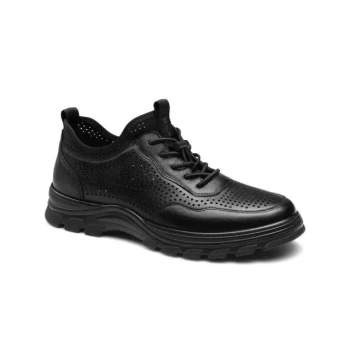
Les chaussures d'entraînement influencent mécaniquement le contrôle postural en introduisant des couches artificielles d'amorti et de soutien structurel entre le pied et le sol. Ces caractéristiques, tout en offrant du confort, modifient la base de support naturelle du pied et entraînent souvent une augmentation du balancement du centre de gravité lors des mouvements à charge lourde.
La présence d'une semelle intermédiaire amortie crée une instabilité mécanique qui oblige le corps à effectuer des micro-ajustements constants, réduisant ainsi l'efficacité de la transmission des forces. En atténuant le retour sensoriel naturel provenant des semelles des pieds, les chaussures d'entraînement standard peuvent compromettre l'activation des muscles intrinsèques du pied essentiels à la stabilisation.
L'impact mécanique sur la stabilité
Modification de la base de support
Les chaussures d'entraînement standard sont conçues avec un soutien structurel et des couches d'amorti destinées à absorber les chocs. Cependant, sous de lourdes charges, ces couches compressibles créent une surface instable sous le pied.
Au lieu d'une plateforme rigide, le pied repose sur un matériau qui se déforme sous la pression. Cette déformation modifie la géométrie de la base de support, obligeant l'athlète à compenser mécaniquement pour maintenir son équilibre.
Augmentation du balancement du centre de gravité
L'instabilité introduite par l'amorti des chaussures entraîne des changements mesurables dans le contrôle postural. La recherche indique que le port de chaussures entraîne une augmentation du balancement du centre de gravité (CDG) par rapport aux conditions pieds nus.
Lorsque la base se déplace en raison de la compression de la semelle intermédiaire, le CDG du corps fluctue de manière plus significative. Cela oblige le système neuromusculaire à dépenser plus d'énergie pour la stabilisation plutôt que pour le déplacement de la charge.
La déconnexion sensorielle
Blocage du retour cutané
Le contrôle postural repose fortement sur le retour tactile cutané plantaire – les informations sensorielles envoyées par la peau du dessous des pieds au cerveau.
Les chaussures d'entraînement agissent comme une barrière, "aveuglant" efficacement ces capteurs aux nuances de la surface du sol. Sans ce retour d'information détaillé, le cerveau dispose de moins de données pour coordonner les micro-ajustements rapides de l'équilibre.
Réduction de l'activation musculaire intrinsèque
Dans des conditions pieds nus, les muscles intrinsèques du pied s'engagent activement pour agripper le sol et stabiliser la voûte plantaire.
Les structures de chaussures rigides ou de soutien effectuent souvent ce travail artificiellement, entraînant une réduction de l'activation de ces muscles stabilisateurs. Avec le temps, la dépendance au soutien externe de la chaussure peut diminuer la capacité naturelle du pied à gérer des charges lourdes de manière autonome.
Le compromis : Confort vs. Efficacité
Perte de transmission de force
Un compromis essentiel dans le port de chaussures d'entraînement amorties est la perte d'efficacité de transmission de force.
Lors du levage de charges lourdes, l'objectif est de transférer la force du corps directement dans le sol. Les matériaux souples dissipent une partie de cette énergie, agissant comme un tampon plutôt qu'un conduit.
Limites du soutien structurel
Bien que les chaussures offrent un soutien structurel externe, elles peuvent masquer des déficiences mécaniques sous-jacentes.
Se fier à la chaussure pour la stabilité plutôt qu'aux mécaniques naturelles du pied peut procurer un faux sentiment de sécurité. Cela peut masquer la détection des défaillances de forme qui seraient immédiatement apparentes dans un scénario pieds nus ou minimaliste.
Optimisation des chaussures pour les charges lourdes
Pour maximiser la performance et la sécurité, vous devez aligner votre choix de chaussures avec vos objectifs d'entraînement spécifiques.
- Si votre objectif principal est de maximiser la stabilité et l'équilibre : Privilégiez l'entraînement pieds nus ou les chaussures minimalistes pour maximiser le retour sensoriel plantaire et réduire le balancement du centre de gravité.
- Si votre objectif principal est le transfert de force maximal : Évitez les chaussures avec des semelles intermédiaires compressibles, en optant plutôt pour des semelles dures et plates qui empêchent les fuites d'énergie et assurent une base de support rigide.
Plus votre pied est proche du sol, plus vous avez de contrôle sur la charge.
Tableau récapitulatif :
| Caractéristique | Impact sur le contrôle postural | Effet mécanique résultant |
|---|---|---|
| Semelle intermédiaire amortie | Crée une plateforme instable et compressible | Augmentation du balancement du CDG et micro-instabilité |
| Soutien structurel | Limite l'engagement des muscles intrinsèques du pied | Capacité de stabilisation naturelle réduite |
| Matériau de semelle épais | Bloque le retour tactile cutané plantaire | Données sensorielles diminuées pour les ajustements d'équilibre |
| Absorption d'énergie | Dissipe la force au lieu de la canaliser | Efficacité réduite dans la transmission de force |
| Changement de géométrie | Se déforme sous charge lourde | Géométrie de la base de support modifiée |
Élevez votre ligne de chaussures grâce à l'excellence d'ingénierie de 3515
En tant que fabricant à grande échelle de premier plan au service des distributeurs mondiaux et des propriétaires de marques, 3515 se spécialise dans l'équilibre entre la performance mécanique et le confort de l'utilisateur. Notre série phare de chaussures de sécurité et nos chaussures d'entraînement spécialisées sont conçues pour fournir le soutien rigide et le retour sensoriel requis pour une utilisation professionnelle intensive.
Que vous ayez besoin de bottes tactiques de précision, de baskets d'entraînement ou de chaussures habillées formelles pour une distribution en gros, nos capacités de production complètes garantissent que votre marque offre une stabilité et une transmission de force supérieures.
Prêt à optimiser votre portefeuille de chaussures ? Contactez-nous dès aujourd'hui pour discuter de vos besoins en fabrication en gros et laissez notre expertise renforcer les fondations de votre marque.
Références
- Alex Souto Maior, L.F. da Silva. Deadlift Exercise with Shoes or Barefoot: Effects on Balance and Postural Control in Men and Women. DOI: 10.32098/mltj.03.2023.14
Cet article est également basé sur des informations techniques de 3515 Base de Connaissances .
Produits associés
- Chaussures d'entraînement légères et respirantes pour la vente en gros et la fabrication OEM sur mesure
- Chaussures d'entraînement OEM personnalisées Fabricant en gros Durable et respirant
- Wholesale Breathable & Cushioned Training Shoes Custom Factory Production
- Chaussures d'entraînement durables et respirantes en gros pour les marques personnalisées
- Chaussures d'entraînement respirantes en gros Fabricant de chaussures d'athlétisme sur mesure
Les gens demandent aussi
- Pourquoi les chaussures d'entraînement légères sont-elles souvent préférées aux chaussures de randonnée professionnelles pour la marche en milieu urbain ? Maximiser le confort en ville
- Quel est le rôle principal de la formation spécialisée ou des chaussures orthopédiques ? Améliorer la sécurité lors de l'entraînement à l'équilibre chez les personnes âgées
- Pourquoi les chaussures d'entraînement professionnelles sont-elles essentielles en physiothérapie ? Assurer la sécurité du patient et la stabilité de la démarche
- Pourquoi la résistance au glissement et la stabilité des chaussures d'entraînement sont-elles essentielles dans l'analyse de la marche ? Assurer l'exactitude des données
- Pourquoi l'utilisation de chaussures plates ou de chaussures d'entraînement professionnelles est-elle essentielle pour la WBV ? Maximiser le transfert d'énergie vibratoire