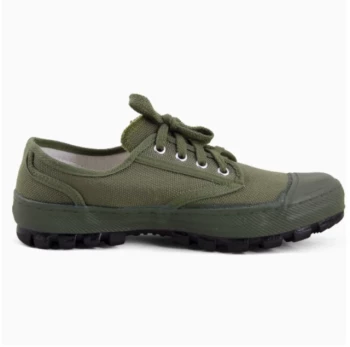
La conception de la semelle des chaussures d'entraînement professionnelles haute performance transforme la mécanique de la démarche en privilégiant l'efficacité biomécanique plutôt que l'isolation rigide. Contrairement aux bottes de protection robustes qui immobilisent souvent le pied, les semelles spécialisées des chaussures d'entraînement utilisent des matériaux à haute flexibilité et des différences de hauteur talon-pointe scientifiques. Cette architecture soutient la flexion naturelle du pied et une transmission fluide des forces, ce qui se traduit par une foulée plus symétrique et une réduction significative de la fatigue musculaire.
Idée clé : La différence fondamentale réside dans la réactivité par opposition à la résistance. Alors que les bottes robustes s'appuient sur la rigidité pour la protection externe, les chaussures d'entraînement haute performance utilisent la flexibilité de la semelle et le retour d'énergie pour minimiser le coût physiologique de la marche, permettant au porteur de se déplacer plus naturellement et efficacement.
La biomécanique de l'architecture de la semelle
Maximiser la flexion naturelle
Les bottes robustes ont souvent des semelles extérieures rigides conçues pour résister aux perforations ou aux écrasements, mais cela crée un effet de "contention" sur le pied.
En revanche, les chaussures d'entraînement haute performance utilisent des matériaux de semelle intermédiaire à haute flexibilité. Cela permet au pied de se plier naturellement au niveau des articulations métatarsiennes (la plante du pied) pendant la phase de propulsion d'un pas.
Optimiser la transmission des forces
L'efficacité de la marche réside dans le transfert fluide de l'énergie du talon à la pointe.
Les chaussures d'entraînement professionnelles emploient une différence de hauteur talon-pointe scientifique. Cette géométrie spécifique agit presque comme un point d'appui, guidant le pied tout au long de son amplitude de mouvement naturelle. Elle assure que la force est transmise vers l'avant pour propulser le marcheur, plutôt que d'être absorbée ou bloquée par une plateforme plate et rigide.
Dynamique du retour d'énergie
Les bottes traditionnelles agissent souvent comme des puits d'énergie : elles absorbent le choc de l'impact mais ne rendent rien.
Les semelles haute performance sont conçues pour un retour d'énergie et un amorti supérieurs. Lorsque le pied frappe le sol, la semelle intermédiaire se comprime puis rebondit, renvoyant une partie de cette énergie au porteur. Cet effet de "ressort" réduit l'effort musculaire requis pour le pas suivant.
Impact sur les performances physiques
Améliorer la symétrie de la démarche
Lorsque les chaussures vont à l'encontre du mouvement naturel, le corps compense, entraînant souvent des longueurs de foulée inégales ou des angles articulaires modifiés.
La conception des chaussures d'entraînement favorise la symétrie de la démarche. Comme la semelle bouge avec le pied plutôt qu'à son encontre, le porteur maintient un rythme constant et équilibré. Cela réduit le risque de blessures dues à des efforts répétitifs associées aux mécanismes altérés courants chez les porteurs de bottes lourdes.
Réduire la fatigue musculaire
La rigidité a un coût métabolique. Déplacer une botte lourde et rigide demande aux muscles de la jambe de travailler plus dur pour soulever le poids et forcer la botte à fléchir.
En combinant des matériaux légers avec des semelles flexibles, les chaussures d'entraînement réduisent considérablement la fatigue musculaire. La réduction de la résistance permet aux muscles de la jambe de fonctionner plus efficacement, préservant l'énergie du porteur sur de longs quarts de travail.
Comprendre les compromis
Bien que les avantages de la conception des chaussures d'entraînement pour la démarche soient clairs, il est essentiel de reconnaître pourquoi les bottes rigides existent.
Le coût de la flexibilité La flexibilité même qui améliore la démarche peut être un inconvénient dans les environnements dangereux. Une semelle flexible offre moins de protection contre les perforations d'objets pointus (comme les clous) et moins de stabilité sur les terrains irréguliers et meubles par rapport à une tige rigide que l'on trouve dans les bottes robustes.
Protection contre les chocs compromise Les chaussures d'entraînement haute performance privilégient la mobilité. Par conséquent, elles manquent souvent des embouts de sécurité en acier ou des protections métatarsiennes requises dans les zones de construction ou industrielles lourdes. Le gain en efficacité de la démarche nécessite un sacrifice en matière de protection maximale contre les chocs.
Faire le bon choix pour votre environnement
Choisir la bonne chaussure est un équilibre entre l'efficacité biomécanique et la sécurité environnementale.
- Si votre priorité est la vitesse et l'endurance : Choisissez des chaussures d'entraînement professionnelles haute performance. Les semelles flexibles et le retour d'énergie minimiseront la fatigue et maintiendront une mécanique de démarche saine lors de déplacements à haut volume.
- Si votre priorité est la protection contre les dangers : Optez pour des bottes de protection robustes. La semelle rigide est nécessaire pour protéger contre les perforations, les écrasements et les terrains instables, même au détriment de l'efficacité de la démarche.
En fin de compte, si l'environnement le permet, passer à une conception de semelle haute performance est le moyen le plus efficace de réduire la charge physiologique de la marche.
Tableau récapitulatif :
| Caractéristique | Chaussures d'entraînement haute performance | Bottes de protection robustes |
|---|---|---|
| Flexibilité de la semelle | Élevée (accent sur la flexion métatarsienne) | Faible (rigide pour la protection) |
| Transmission des forces | Transition fluide talon-pointe | Souvent bloquée par une plateforme rigide |
| Retour d'énergie | Amorti à fort rebond | Faible (absorbe/perd de l'énergie) |
| Impact sur la démarche | Favorise la symétrie et le rythme naturel | Peut entraîner des mécanismes de compensation |
| Niveaux de fatigue | Significativement réduits | Coût métabolique plus élevé |
| Cas d'utilisation idéal | Vitesse, endurance, marche à haut volume | Dangers industriels, risques de perforation |
Améliorez votre flotte avec les chaussures haute performance 3515
En tant que fabricant à grande échelle desservant les distributeurs et les propriétaires de marques, 3515 offre des capacités de production complètes pour tous les types de chaussures. Notre série phare Safety Shoes est ancrée dans une ingénierie de précision, tandis que notre vaste portefeuille couvre les bottes de travail et tactiques, les chaussures d'extérieur, les chaussures d'entraînement et les baskets, y compris les chaussures habillées et formelles pour répondre à divers besoins en gros.
Prêt à offrir à vos clients des chaussures alliant efficacité biomécanique et durabilité ? Contactez-nous dès aujourd'hui pour discuter de vos besoins de production en gros et découvrez comment notre expertise en fabrication peut apporter de la valeur à votre marque.
Références
- Alberto Arceri, Cesare Faldini. Safety Footwear Impact on Workers’ Gait and Foot Problems: A Comparative Study. DOI: 10.3390/clinpract14040120
Cet article est également basé sur des informations techniques de 3515 Base de Connaissances .
Produits associés
- Chaussures d'entraînement OEM personnalisées Fabricant en gros Durable et respirant
- Chaussures d'entraînement légères et respirantes pour la vente en gros et la fabrication OEM sur mesure
- Chaussures d'entraînement respirantes en gros Fabricant de chaussures d'athlétisme sur mesure
- Wholesale Breathable & Cushioned Training Shoes Custom Factory Production
- Chaussures d'entraînement durables et respirantes en gros pour les marques personnalisées
Les gens demandent aussi
- Pourquoi des chaussures de sport spécialisées sont-elles nécessaires pour la rééducation de la cheville ? Sécurité et stabilité retrouvées pendant la convalescence
- Pourquoi le test de rigidité de la semelle à l'aide d'un dynamomètre est-il nécessaire ? Créez des chaussures d'entraînement supérieures avec précision
- Pourquoi l'utilisation de chaussures plates ou de chaussures d'entraînement professionnelles est-elle essentielle pour la WBV ? Maximiser le transfert d'énergie vibratoire
- Pourquoi l'intégration d'un amorti avancé dans les chaussures d'entraînement est-elle nécessaire pour les athlètes ? Favorise la récupération et la performance
- Pourquoi est-il nécessaire que les participants portent des chaussures d'entraînement professionnelles ? Assurer l'exactitude des données et la sécurité des patients