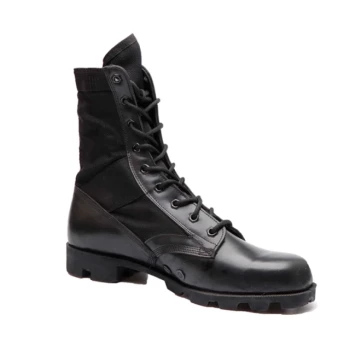
Les chaussures haute performance sécurisent votre pied grâce à une combinaison essentielle de traction agressive et de renforcement structurel. Plus précisément, ces bottes utilisent des semelles extérieures à crampons profonds et résistantes à l'abrasion, associées à un support rigide de la cheville, pour maintenir la stabilité latérale et éviter de glisser sur des surfaces complexes et inégales.
Point essentiel à retenir La protection sur terrain accidenté ne consiste pas seulement à protéger le pied des impacts ; il s'agit de contrôle biomécanique. En s'imbriquant avec le sol grâce à des crampons profonds et en stabilisant l'articulation de la cheville contre les mouvements latéraux, les chaussures spécialisées transforment les surfaces instables en une plateforme sécurisée, prévenant les blessures aiguës comme les entorses et réduisant la fatigue chronique.
La mécanique de la traction et de la stabilité
Architecture de la semelle extérieure à crampons profonds
La première ligne de défense est la semelle extérieure, qui doit présenter des motifs de bande de roulement profonds et des matériaux résistants à l'abrasion. Ces crampons s'enfoncent dans le sol meuble ou le gravier pour maximiser la friction, assurant un contact suffisant avec le sol même sur un terrain rocheux ou glissant.
Support latéral de la cheville
Pour contrer le risque de torsion de la cheville sur un sol irrégulier, ces bottes intègrent des systèmes de soutien de la cheville renforcés. Cette rigidité structurelle restreint les mouvements latéraux excessifs, prévenant les entorses lorsque le poids est déplacé de manière inattendue en raison d'un trottoir défoncé ou de racines d'arbres.
Protection contre les chocs
Le terrain accidenté dissimule souvent des dangers tels que des pierres pointues, des racines saillantes ou des carreaux surélevés. Les chaussures haute performance sont dotées de zones de protection renforcées aux orteils et de semelles épaisses et résistantes à l'usure pour protéger le pied des collisions directes et de l'inconfort de marcher sur des objets pointus.
Réduction de la contrainte physiologique
Absorption des chocs et retour d'énergie
Dans les environnements à forte intensité, le coût physique pour le corps est important. Les chaussures avancées utilisent des matériaux d'amorti spécialisés pour absorber les chocs et fournir un retour d'énergie, protégeant le système squelettique lors d'activités à forte charge comme la course ou l'escalade.
Alignement musculo-squelettique
La stabilité affecte plus que les pieds ; elle impacte tout le corps. Des caractéristiques telles que le soutien de la voûte plantaire et une adhérence supérieure fournissent une base stable qui réduit la fatigue des muscles des membres inférieurs et diminue le risque de lombalgie causée par la compensation d'un appui instable.
Comprendre les compromis
Poids vs Durabilité
Pour obtenir une protection de qualité industrielle et une résistance à l'usure, ces bottes utilisent souvent des matériaux lourds et denses. Bien que cela maximise la durabilité pour la manipulation lourde et les terrains accidentés, le poids supplémentaire peut augmenter la dépense énergétique sur de longues distances par rapport à des options plus légères et moins protectrices.
Sensibilité vs Protection
Les semelles épaisses et résistantes à l'abrasion sont excellentes pour protéger les pieds du gravier tranchant et des chocs. Cependant, cela crée une barrière qui réduit la proprioception (sensation du sol), rendant potentiellement plus difficile l'évaluation des changements subtils de texture du terrain par rapport à des chaussures plus fines et minimalistes.
Faire le bon choix pour votre objectif
Le choix des chaussures appropriées dépend de la priorité que vous accordez à la stabilité maximale ou à l'agilité athlétique.
- Si votre objectif principal est le travail intensif ou le transport de charges : Privilégiez les bottes avec des tiges de cheville hautes et des semelles extérieures rigides et résistantes à l'usure pour prévenir les blessures musculo-squelettiques et la fatigue.
- Si votre objectif principal est la vitesse et les mouvements à haute intensité : Recherchez un amorti avec "retour d'énergie" et des crampons profonds qui offrent une traction sans le poids excessif des chaussures de sécurité de qualité industrielle.
La bonne botte ne se contente pas de couvrir votre pied ; elle agit comme une ancre qui stabilise tout votre corps contre l'imprévisibilité du sol.
Tableau récapitulatif :
| Caractéristique | Mécanisme de protection | Bénéfice principal |
|---|---|---|
| Semelle extérieure à crampons profonds | Les bandes de roulement résistantes à l'abrasion s'enfoncent dans le sol meuble/gravier | Traction maximale et résistance au glissement |
| Support de cheville | Rigidité structurelle renforcée | Prévient les torsions latérales et les entorses |
| Zones d'orteils et semelles | Matériaux de protection contre les chocs | Protection contre les objets pointus et les collisions |
| Technologie d'amorti | Absorption des chocs et retour d'énergie | Réduit la fatigue musculaire et la tension squelettique |
Collaborez avec 3515 pour des solutions de chaussures haute performance
En tant que fabricant à grande échelle au service des distributeurs et des propriétaires de marques, 3515 offre des capacités de production complètes pour tous les types de chaussures. Notre série phare Chaussures de sécurité est conçue pour offrir la stabilité et la protection ultimes décrites ci-dessus. Des bottes tactiques robustes et des chaussures d'extérieur aux chaussures d'entraînement et baskets spécialisées, notre vaste portefeuille répond à divers besoins en gros avec une durabilité de qualité industrielle.
Prêt à améliorer votre gamme de produits avec des chaussures qui maîtrisent tous les terrains ? Contactez-nous dès aujourd'hui pour discuter de vos besoins de fabrication en gros et découvrir la valeur que 3515 apporte à votre marque.
Références
- Narine Selumyan, Hayk Petrosyan. STUDY OF TYPES OF INJURIES AND CAUSES OF THEIR OCCURRENCE IN VARIOUS SPORTS. DOI: 10.53068/25792997-2023.1.8-135
Cet article est également basé sur des informations techniques de 3515 Base de Connaissances .
Produits associés
- Bottes tactiques en cuir durable Fabrication en gros et sur mesure pour les marques
- Bottes tactiques en daim à haute adhérence Commerce de gros et fabrication sur mesure
- Bottes tactiques en cuir durable à la cheville haute pour la vente en gros et la fabrication sur mesure
- Wholesale Waterproof Tactical Boots Custom Suede & High-Traction Soles (Bottes tactiques imperméables en gros)
- Bottes tactiques durables à coupe intermédiaire pour le commerce de gros et les marques de distributeur
Les gens demandent aussi
- Quelles protections spécialisées offrent les bottes tactiques ? Maximisez l'endurance avec des chaussures de haute performance.
- Quelles caractéristiques les agents des forces de l'ordre doivent-ils rechercher dans les bottes tactiques ? Guide essentiel pour la sécurité et la performance
- Importance des bottes tactiques professionnelles dans les régions de ravins de lœss : assurez la sécurité et la précision de la surveillance sur le terrain
- Qu'est-ce que le rucking et pourquoi les bottes tactiques sont-elles adaptées ? Découvrez les chaussures ultimes pour les charges lourdes
- Qu'est-ce qui rend l'adhérence des bottes tactiques supérieure ? Découvrez la science de l'adhérence imbattable